

As the post-pandemic housing cycle evolves, the US rental landscape is entering a new phase: one defined by tight rental supply, resurgent demand, and renewed upward pressure on rents.
According to the latest data, the top 10 US metro areas with the lowest rental vacancy rates in early 2025 are:
| Rank | Metro Area | Vacancy Rate (%) | Key Insights |
|---|---|---|---|
| 1 | San Diego, CA | 2.5% | Strong job growth + limited construction |
| 2 | Miami, FL | 2.7% | Luxury demand, foreign interest, few new permits |
| 3 | New York, NY | 2.9% | Return to urban cores, construction slowdown |
| 4 | Boston, MA | 3.0% | Biotech boom, restrictive zoning |
| 5 | Tampa, FL | 3.2% | Explosive suburban population growth |
| 6 | San Jose, CA | 3.3% | Tech rebound + high barriers to entry |
| 7 | Charlotte, NC | 3.4% | Northeast migration + job market strength |
| 8 | Phoenix, AZ | 3.5% | Demand remains high despite recent builds |
| 9 | Atlanta, GA | 3.6% | Affordability draws and locks in renters |
| 10 | Denver, CO | 3.8% | Pipeline delays + strong millennial appeal |
What’s Fueling the Squeeze?
- Supply Shock : A sharp deceleration in multifamily construction due to rising costs, regulatory hurdles, and economic uncertainty.
- Demand Resurgence : Higher mortgage rates are keeping would-be homebuyers in the rental pool longer, increasing leasing pressure.
- Population Shifts : Inbound migration to sunbelt cities and job corridors is outpacing development capacity.
What It Means by Stakeholder:
For Investors:
- Tight markets = pricing power . Expect cap rate compression in these meters.
- Asset repositioning (Class B → Class A) becomes more attractive.
- Renters are less mobile, increasing tenant stability and renewal rates.
For Developers:
- Projects in constrained meters (like Boston or San Diego) could justify higher construction costs due to scarcity premiums.
- Watch for entitlement bottlenecks and financing challenges in low-vacancy zones.
For Renters:
- Bargains are disappearing. Fewer concessions. Faster lease-ups.
- Flexibility is fading in meters under 3% vacancy—leases are tightening and prices climbing.
Looking Ahead
Analysts now forecast 5–10% rent growth in the most supply (constrained metros by mid) 2026. While national averages may mask these hotspots, the localized impacts are critical for decision-making.
In markets like Miami, San Diego, and Boston, 2025 could mark a new phase of intensified rental competition.
📬 Want help understanding how this trend impacts your property goals?
Reach out for a conversation: we’re here to deliver relief, insight, and clarity.
This chart illustrates the shifting composition of the US renter population:
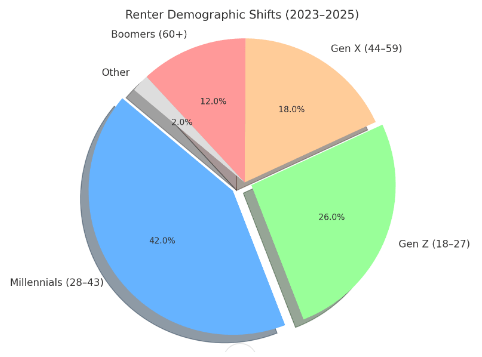
- Millennials (28–43): 42%
- Gen Z (18–27): 26%
- Gen X (44–59): 18%
- Boomers (60+): 12%
- Other: 2%
The US rental market is entering a new phase: not just in price , but in who’s renting, where, and why . While vacancy rates are plummeting in meters like San Diego, Miami, and Boston, a deeper shift is unfolding beneath the surface:
Demographics are reshaping rental demand like never before.
According to our latest breakdown, Millennials now make up 42% of the renter population, followed closely by Gen Z at 26% . These younger cohorts aren’t just renters by necessity: they’re also driving demand for lifestyle-based rentals in walkable, job-rich urban centers.
Here’s what the demographic shift means:
🔹 Millennials are increasingly priced out of homeownership due to interest rates and housing supply shortages, yet still prioritize proximity to jobs, schools, and amenities. Many are long-term renters by choice: seeking quality and flexibility.
🔹 Gen Z renters are entering the workforce fast and gravitating toward cities with tech, healthcare, and creative sector growth. They’re mobile, digitally savvy, and expect more from their rentals.
🔹 Boomers & Gen X, though smaller renter groups, are playing a growing role in downsized luxury rentals or seasonal living.
So, if you’re thinking in sell or make a deal, take in count this info, so you can have a full strategy on how to approach your ideal tenders/clients, and how to get them into the game.
Contact-us to get relief.